Hyderabad
Negative Pressure Wound Therapy (NPWT)
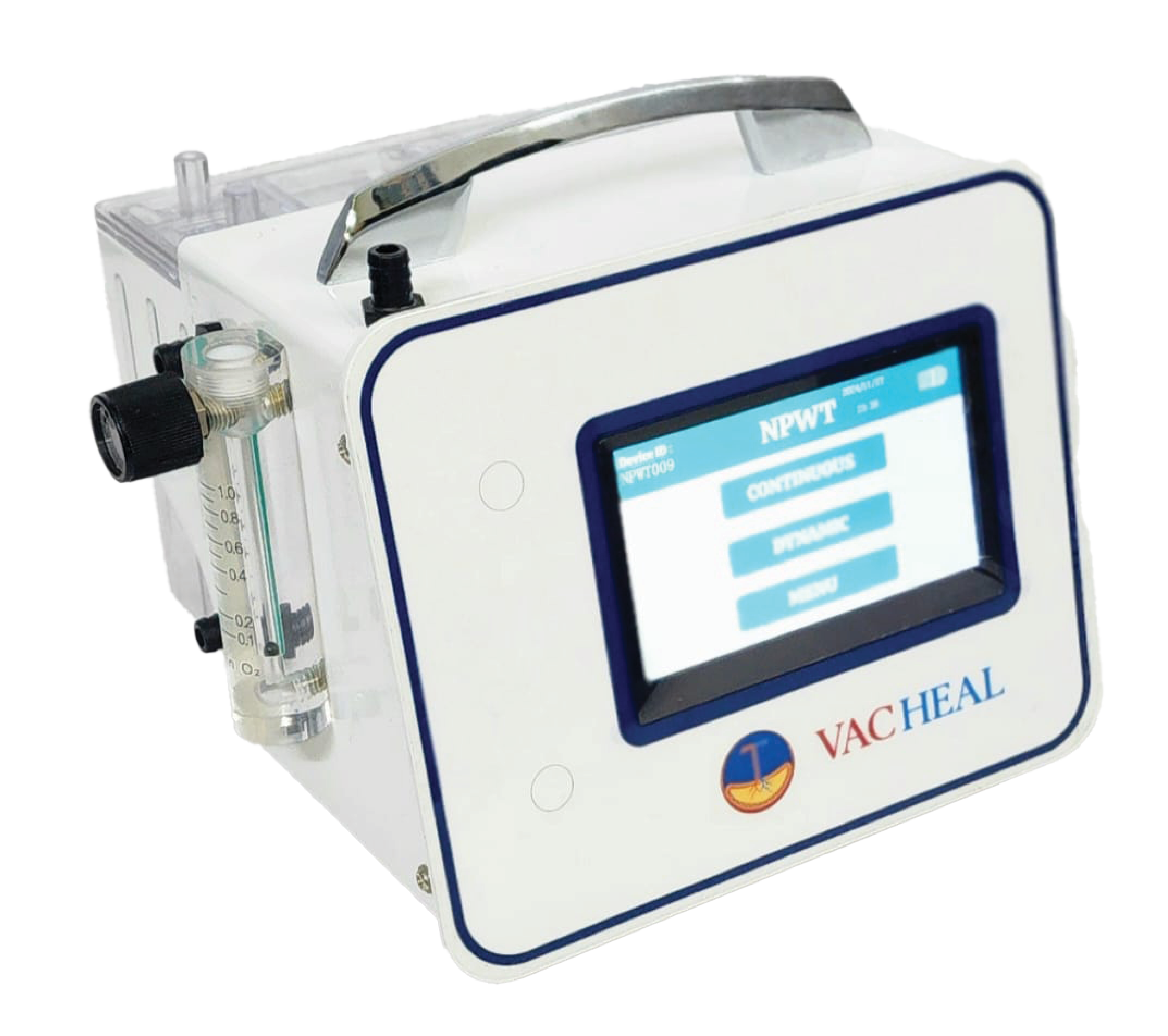

Try-Fusion Wound Therapy Device
NPWT + Installation + Oxygen Therapy
Three therapies, One System, Maximum Healing, Advanced Healing for the most Challenging wounds
-
Maximum Healing
Ensures faster and more complete wound recovery.
-
Advanced Healing
Uses advanced technology for effective treatment of complex wounds.
The Power of Three
integrated Wound Healing Technology
This cutting-edge system synergizes three proven wound therapies into one intelligent device:
-
Negative Pressure Wound Therapy (NPWT)
Promotes granulation, removes exudate, reduces edema.
-
Instillation Therapy
Delivers wound cleansers or antimicrobials directly into the wound bed to break down biofilm and debris.
-
Topical Oxygen Therapy (TOT)
Enhances cellular regeneration and suppresses anaerobic bacterial growth.
Why Choose Tri-Fusion Therapy?
-
Accelerated Healing
Combines mechanical stimulation, chemical cleansing, and oxygenation for optimal tissue recovery.
-
Enhanced Infection Control
Instillation removes wound debris, while oxygen therapy helps inhibit bacterial growth.
-
Customizable Protocols
Individual settings for pressure, fluid delivery, dwell time, and oxygen flow—tailored to each wound.
-
Fewer Dressing Changes
Extended wear time reduces nursing workload and improves patient comfort.
-
All-in-One Compact System
Portable, battery-operated, and ideal for hospitals, clinics, or home care.
Clinical Indications
-
Chronic Diabetic Ulcers
-
Infected Surgical & Traumatic Wounds
-
Pressure Ulcers with Biofilm
-
Wounds with Slough, Necrosis, or Tunneling
-
Compromised Grafts/Flaps
-
Burns and Exudative Wounds
Technical Specifications
-
Hassle-free system that continues to operate even when error alarms appear, until the issue is rectified
-
Easy-to-use system with touchscreen or soft-button operation
| Feature | Specification |
|---|---|
| Therapy Modes | VAC, Instillation and Topical Oxygen Supply |
| Negative Pressure Range | -40mmHg to -200mmHg |
| Interface and Display | Intuitive touchscreen operation & TFT Display |
| Pressure Modes (VAC Modes) |
Continuous: -40mmHg to -200mmHg Dynamic Mode High: -100mmHg to -200mmHg Low: -40mmHg to -100mmHg |
| Liquid (Antibiotic / Saline) | Independent fluid control through Peristaltic Pump |
| Instillation Therapy Alarms | Tube Blockage Alarm, Vacuum Leakage Alarm |
| Battery Backup | Long lasting 20 hr backup (9000 mAh) on continuous pump operation |
| Battery Charging Time | 3–4 hrs during operation |
| Material of Construction | Sturdy Metal Body for Rugged Use |
| Power Input | 230–240V, 50–60Hz |
Revolutionizing Wound Care
Our Triple-Modality Device represents the future of advanced wound management—designed by clinicians, for clinicians. Whether in ICUs, wound clinics, or home health settings, it delivers safe, efficient, and faster wound resolution.